
What Qualifies as a Construction Defect, and How Do You Prove It?
You paid for a home or commercial building that should last decades. Instead, you’re staring at foundation cracks, water stains spreading across the ceiling, or doors that no longer close — and the builder won’t return your calls.
Every month you wait, the damage spreads, repair costs climb, and your property value drops. Worse, strict legal deadlines run in the background whether you act or not. Miss them, and you lose the right to recover anything — no matter how obvious the defect.
The law gives you a way out. If your property fails to meet building codes, contract specifications, or accepted standards of workmanship, you may hold the builder, contractor, or developer financially responsible. The construction defect attorneys at More 2 You Law, PC pursue these claims across Alabama, Florida, Georgia, and Mississippi — and charge 25% or less in fees, compared to the 33%–45% most plaintiffs’ firms take.
Whether it’s gathering evidence, negotiating with insurance companies, or representing clients in court, More 2 You handles every aspect with utmost professionalism and dedication.
What Legally Qualifies as a Construction Defect?
A construction defect is more than a cosmetic flaw. It is a deficiency in the design, materials, workmanship, or site preparation of a building that violates the construction contract, applicable building codes, or the accepted standard of workmanlike quality.
The key question courts ask is simple: did the work fall below what a competent professional would have delivered under the same contract and codes? If the answer is yes, and the failure caused damage, you likely have a claim.
The Four Categories of Construction Defects
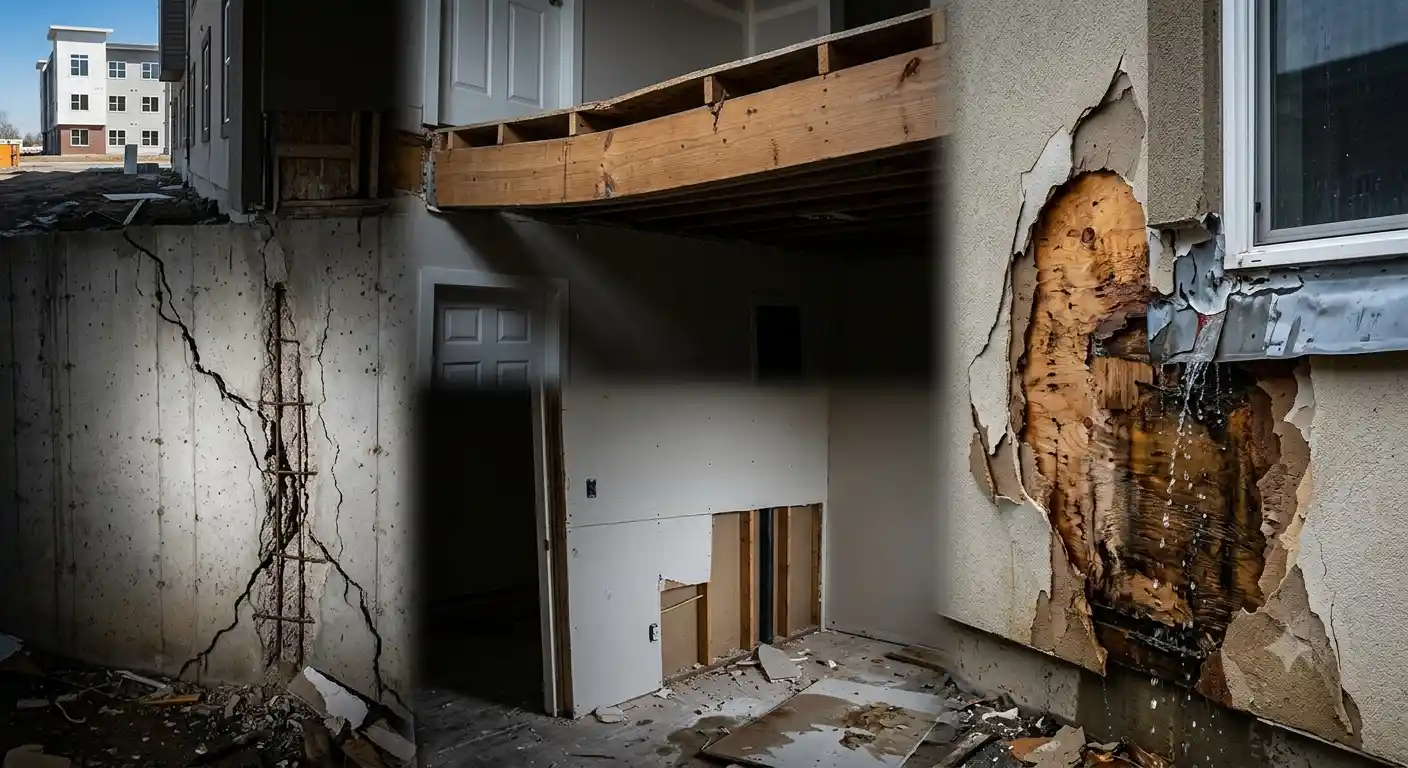
Courts and construction experts group defects into four categories. Identifying the right category matters, because it determines who you can hold liable.
Design deficiencies. These flaws originate in the architectural or engineering plans — undersized structural supports, improper drainage design, or specifications that ignore local soil and wind-load conditions. The architect or engineer typically bears responsibility.
Material deficiencies. Substandard or defective building products cause these failures: window seals that fail early, siding that warps, drywall that deteriorates, or lumber prone to rot. Liability may reach the manufacturer or supplier, not just the installer.
Workmanship deficiencies. These are errors made during construction itself — improperly installed roof flashing, faulty electrical wiring, bad plumbing connections, or foundation pours that crack. The general contractor or the subcontractor who performed the work is usually responsible.
Subsurface and geotechnical deficiencies. Poor soil compaction, inadequate site investigation, or failed drainage planning cause foundation settlement and retaining wall failures. These claims often involve developers and geotechnical engineers.
Patent vs. Latent Defects: Why the Difference Matters
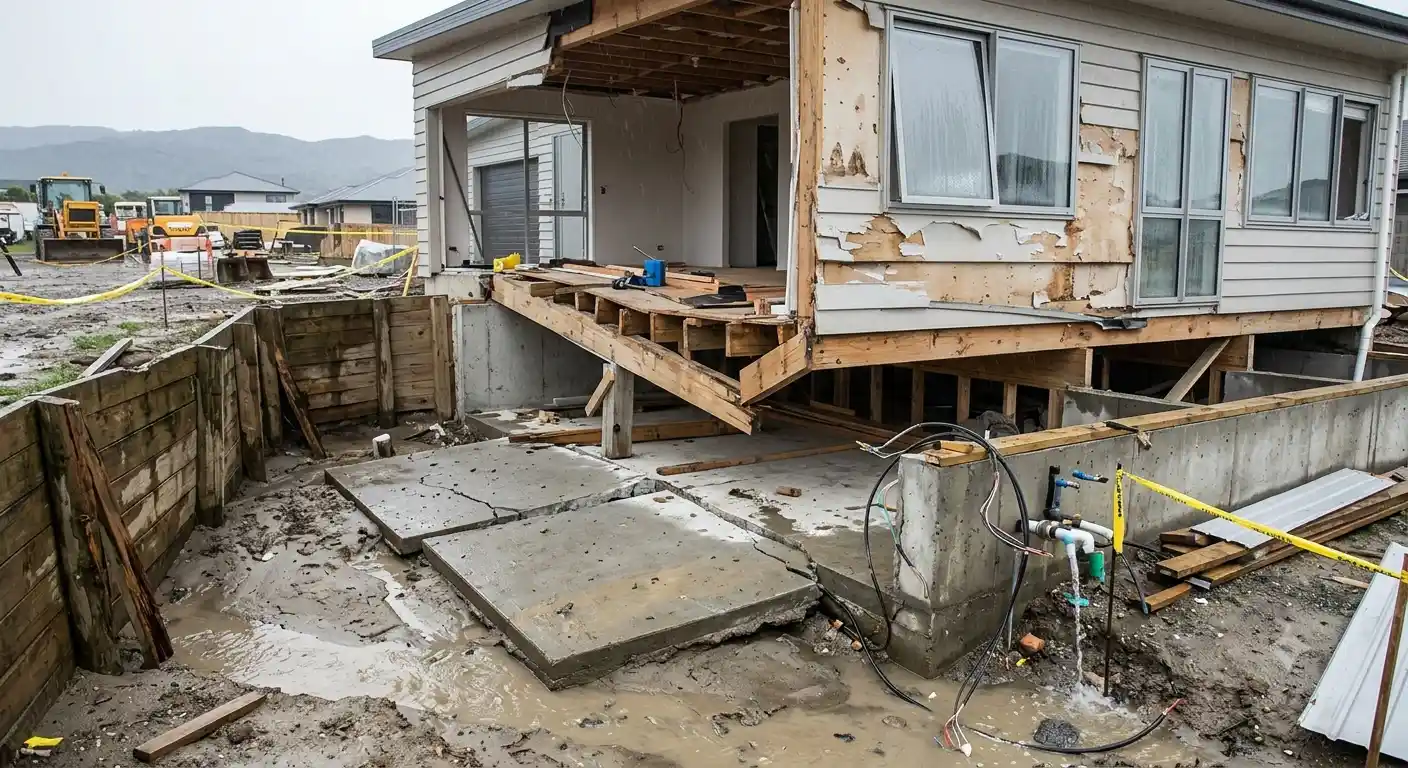
A patent defect is visible on reasonable inspection — a cracked driveway or a missing handrail. Courts may find you waived claims for patent defects if you accepted the finished work without objection.
A latent defect stays hidden and reveals itself over time: water intrusion inside walls, mold behind drywall, or slow foundation movement. Most states apply a discovery rule to latent defects, meaning your filing deadline starts when you discovered — or reasonably should have discovered — the problem, not when construction finished. That distinction can make or break a claim filed years after completion.
How Do You Prove a Construction Defect?
Proving a construction defect claim comes down to four elements: a duty owed to you, a breach of that duty, causation, and measurable damages. Here is how you build that proof.
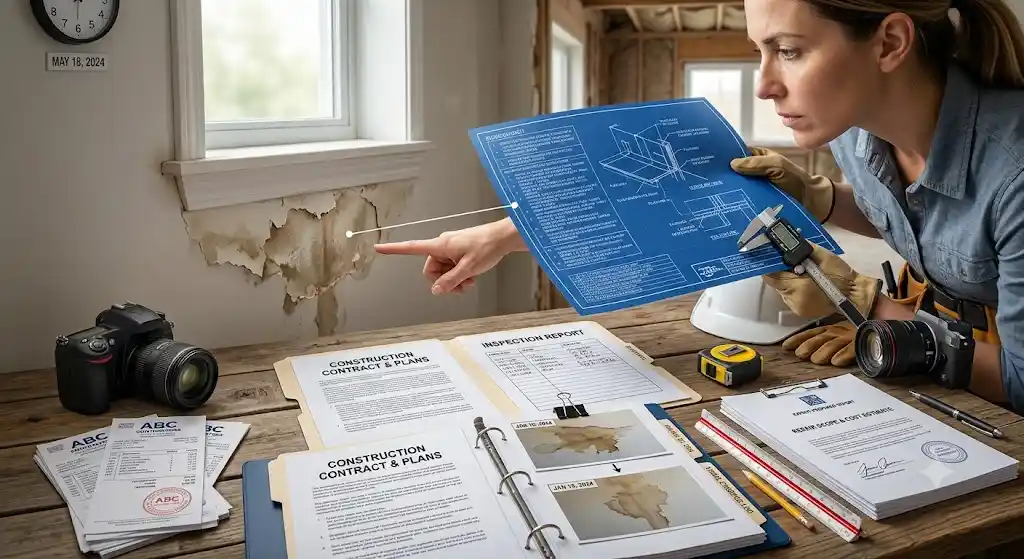
- Preserve the paper trail. Gather the construction contract, plans, specifications, change orders, permits, inspection reports, warranties, and every email or text exchanged with the builder. The contract defines the standard the work had to meet.
- Document the damage. Photograph and video the defect with date stamps, and keep documenting as conditions worsen. Courts and insurers respond to visual evidence of progression.
- Retain qualified experts. Structural engineers, architects, and building envelope consultants identify the defect’s cause, tie it to code violations or deviations from industry standards, and prepare repair scopes with cost estimates. Expert testimony is the backbone of nearly every successful construction defect lawsuit.
- Show causation and damages. Your experts must connect the specific deficiency to the specific harm — for example, improper flashing caused the water intrusion that caused the mold. Repair estimates, appraisals, and receipts then quantify what the defect cost you.
- Act before deadlines expire. Every state imposes a statute of limitations, and most add a statute of repose — an absolute cutoff measured from substantial completion. In Alabama, for example, negligence claims generally carry a two-year limitations period, written contract claims carry six years, and a seven-year statute of repose bars most claims against builders and design professionals regardless of discovery. Florida, Georgia, and Mississippi each set different deadlines, so the safest move is contacting an attorney the moment you suspect defective work.
Legal Grounds for a Construction Defect Claim
Depending on your facts, your attorney may pursue one or more of these theories:
Breach of contract. The work failed to meet the plans, specifications, or quality standards in your agreement.
Breach of warranty. This includes express written guarantees and warranties implied by law, such as the implied warranty of workmanlike performance and, for new homes, the implied warranty of habitability.
Negligence. The contractor, subcontractor, or design professional failed to exercise the reasonable care their profession demands, and that failure caused your damage.
Fraud or misrepresentation. The builder concealed known defects or made false statements to close the sale. Proving intent is harder, but it can open the door to punitive damages.
Who Can Be Held Liable?
Construction defect cases often involve multiple responsible parties: the developer who ran the project, the general contractor who managed it, the subcontractors who performed specific trades, the architects and engineers who designed it, and the suppliers who furnished defective materials. Their insurers usually fund the defense and any settlement.
Identifying every liable party early is critical. Each one adds a potential source of recovery — and each may point the finger at the others.
What Compensation Can You Recover?
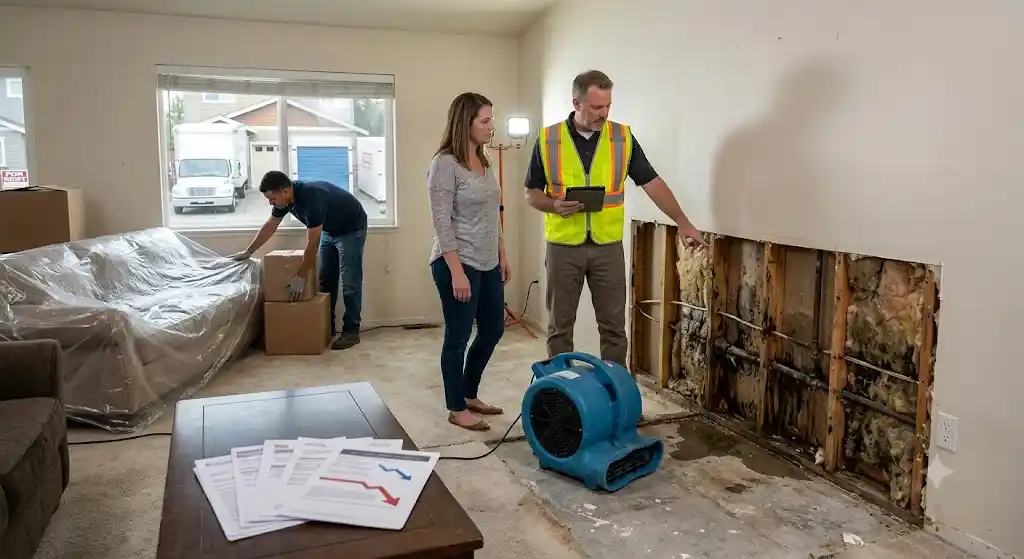
Damages in a construction defect case typically include the cost of repairing the defect and all resulting damage, the diminished market value of your property when repairs cannot fully restore it, loss of use (temporary housing or lost rental income while repairs proceed), and damage to personal property caused by the defect. Because homes and commercial buildings rank among the most valuable assets people own, these recoveries frequently exceed those in other civil claims.
Defective construction disputes also overlap with property insurance claims and breach of contract cases, and our firm handles all three.
Why Property Owners Choose More 2 You Law, PC
Most plaintiffs’ firms charge 33% to 45% of your recovery. More 2 You Law, PC charges 25% or less. On a construction defect case — where settlements often reach six or seven figures because the property itself is so valuable — that difference can put tens or even hundreds of thousands of additional dollars in your pocket.
The lower fee also aligns our incentives with yours: we have to win more for you to earn the same. We call it the More 2 You Difference.

Talk to a Construction Defect Attorney Before Your Deadline Runs Out
The single most expensive mistake property owners make is waiting. Statutes of limitation and repose are unforgiving, evidence deteriorates, and builders count on you giving up.
Call More 2 You Law, PC at 888.645.2222 or request your free case review today. We will evaluate your defect, identify every responsible party, and fight for the full recovery your property deserves — while charging you 25% or less when we win.
FAQs
What is the difference between a construction defect and normal wear and tear?
A construction defect exists at completion because of flawed design, materials, or workmanship, even if it takes years to appear. Wear and tear develops later from ordinary aging and use. An expert inspection distinguishes the two by tracing the failure back to its cause — a roof that leaks at year two points to defective installation, while one that leaks at year twenty-five likely reached the end of its service life.
Do I need an expert witness to prove my construction defect claim?
In almost every case, yes. Courts require testimony from a qualified professional — usually a structural engineer, architect, or trade specialist — to establish the standard of care, identify the code violation or workmanship failure, and connect it to your damages. Your attorney retains and coordinates these experts as part of building the case.
Can I still sue if the building passed final inspection?
Yes. A certificate of occupancy confirms code compliance at a single point in time; it does not erase the builder’s warranty obligations or shield latent defects that surface after you move in. Municipal inspectors enforce codes — they do not decide civil liability.
Can I sue a subcontractor directly, or only the general contractor?
You can often pursue both. The general contractor typically answers for its subcontractors’ work, but subcontractors, design professionals, and even material suppliers can face direct claims under negligence or warranty theories depending on your state. Naming every responsible party strengthens your position and increases the insurance coverage available.
How much does it cost to hire a construction defect attorney?
More 2 You Law, PC handles construction defect claims on a contingency fee of 25% or less, meaning you pay nothing upfront and no fee unless we recover for you. Expert and litigation costs are discussed and set out in your representation agreement before the case begins.
What should I do first if I suspect defective construction?
Photograph everything, stop any communication that could waive your rights, and gather your contract, warranties, and inspection records. Then contact a construction defect attorney before making major repairs — destroying the evidence of the defect during repair work can seriously weaken your claim. Prompt legal review also protects you against limitations and repose deadlines already running.
How long does a construction defect lawsuit take?
Straightforward claims sometimes settle within months after an expert report and demand. Complex, multi-party cases involving discovery, depositions, and mediation commonly run one to two years, and trial adds more. Most cases resolve through negotiated settlement or mediation before reaching a courtroom.
Does homeowners insurance cover construction defects?
Standard homeowners policies generally exclude the cost of fixing defective work itself, though they may cover resulting damage such as water destruction from a defect-caused leak. The builder’s and subcontractors’ commercial liability policies are usually the real source of recovery, which is why identifying every liable party and policy matters so much.
RECENT POSTS

What Must a Slip and Fall Attorney Prove to Win Big?
You didn't see the wet floor because there was no sign warning you it was there. Now you're nursing a fractured wrist, a...

How Does a Personal Injury Lawyer Value a Brain Injury Case?
An 80,000-pound truck just changed your life. You're dealing with injuries, a totaled vehicle, and a trucking company that...

What Does a Car Wreck Attorney Do That You Can’t?
Your car is totaled. Your neck hurts. And an insurance adjuster is already calling, sounding friendly, asking you to "just...