
How Do You Know If You Have a Defective Medical Device Lawsuit?
A medical device is supposed to restore your health, not destroy it. When an implant fails, a hip replacement loosens, or a CPAP machine exposes you to toxic foam, you’re left with pain, revision surgery, and bills for a problem the manufacturer created.
It gets worse. The company that made the device has teams of lawyers working to deny responsibility, and every state puts a strict deadline on your right to file a product liability claim. Wait too long, and even a strong case disappears.
The good news: you don’t have to figure this out alone. This guide explains exactly how to know if you have a defective medical device lawsuit, and the medical device injury attorneys at MORE 2 YOU LAW, PC review cases for free across Alabama, Florida, Georgia, and Mississippi. Get started with a free consultation today.
Whether it’s gathering evidence, negotiating with insurance companies, or representing clients in court, More 2 You handles every aspect with utmost professionalism and dedication.
5 Signs You May Have a Defective Medical Device Lawsuit
You likely have a valid claim if most of the following apply to your situation. An attorney can confirm the rest during a free case review.
- Your device failed, malfunctioned, or was recalled. Implant failure, device migration, breakage, or an FDA recall notice for your specific model are the clearest red flags.
- You suffered a real injury that required treatment. Infections, chronic pain, organ damage, nerve damage, or revision surgery all count. Frustration with a device that still works safely usually does not.
- A doctor can connect the device to your injury. Medical records linking your complications to the faulty medical device form the backbone of a product liability claim.

4. The device was defective, not just risky. Every device carries some risk. A lawsuit requires a design defect, a manufacturing defect, or a failure to warn about known dangers.
5. You’re still within the statute of limitations. Most states in our service area give you two to three years from the injury, or from the date you discovered it, to file.
If you checked several of these boxes, stop second-guessing and get a legal opinion. Case reviews cost nothing, and the deadline clock is already running.

The 3 Legal Grounds for a Medical Device Claim
Defective medical device lawsuits are a type of product liability claim. To win, your attorney must prove the device was defective in one of three ways.
Design defects. The device was dangerous before it was ever built because the design itself was flawed. Metal-on-metal hip replacements that shed metal debris into surrounding tissue are a well-known example.
Manufacturing defects. The design was sound, but something went wrong during production. Contaminated materials, faulty welds, or skipped quality checks can turn a safe design into a dangerous medical device.
Failure to warn. The manufacturer knew, or should have known, about a risk and failed to warn patients and doctors. Many of the largest medical device settlements rest on internal documents showing the company hid what it knew.
Many devices also reach the market through the FDA’s 510(k) clearance process, which lets manufacturers skip full clinical trials by showing their product is “substantially similar” to an existing device. That shortcut helps explain why so many faulty medical devices end up recalled after patients are hurt.
Medical Devices Currently in Litigation
Manufacturers face active lawsuits and mass tort litigation over several widely used devices. If you were treated with any of the following, your case may be stronger than you think.
Exactech knee, ankle, and hip replacements. Lawsuits allege defective packaging degraded plastic components, causing premature implant failure and revision surgery.
DePuy ATTUNE knee replacements. Claims allege the knee system was defectively designed, leading to loosening, loss of mobility, persistent pain, nerve damage, infection, and additional surgeries.
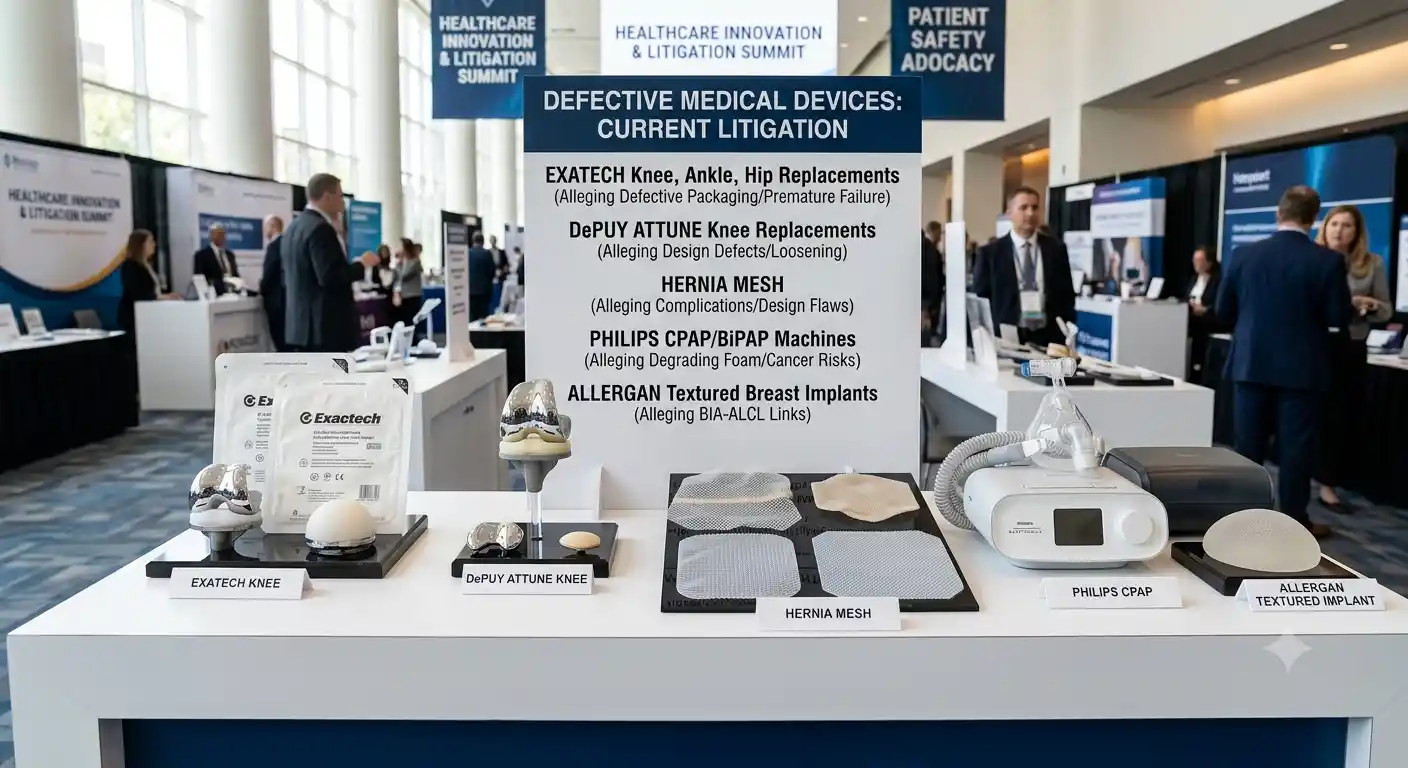
Hernia mesh. Plaintiffs allege certain mesh products were defectively designed and that manufacturers failed to adequately warn doctors about complications like adhesion, migration, and chronic pain.
Philips CPAP and BiPAP machines. Lawsuits claim degrading sound-abatement foam in recalled Philips devices exposed users to particles and gases linked to cancer and respiratory injuries.
Allergan textured breast implants. Claims allege certain recalled textured implants are associated with BIA-ALCL, a rare form of non-Hodgkin’s lymphoma.
Your device isn’t on this list? That doesn’t disqualify you. New medical device recalls and lawsuits emerge constantly, and individual claims succeed even without an active mass tort.

Who Can Be Held Liable for a Defective Medical Device?
Liability usually starts with the manufacturer, but it rarely ends there. Depending on the facts, your medical device injury claim may name the device maker, a component supplier, the distributor, or the seller.
In some cases, a doctor or hospital shares responsibility, for example, when a provider implants a recalled device or ignores safety warnings. Those situations can overlap with a medical malpractice claim, and an experienced attorney will pursue every liable party rather than just the easiest one.
Device injuries also frequently occur alongside harm from prescription medications. If a drug contributed to your injuries, a separate defective drug claim may apply.
What Evidence Do You Need?
Strong evidence separates a payout from a denial. Start protecting your claim now, even before you hire a lawyer.
Keep the device. If your implant is removed during revision surgery, ask in writing that the hospital preserve it. The explanted device is often the single most important piece of physical evidence.
Gather your medical records. Surgical reports, implant identification cards, imaging, and treatment notes establish which device you received and what it did to you.
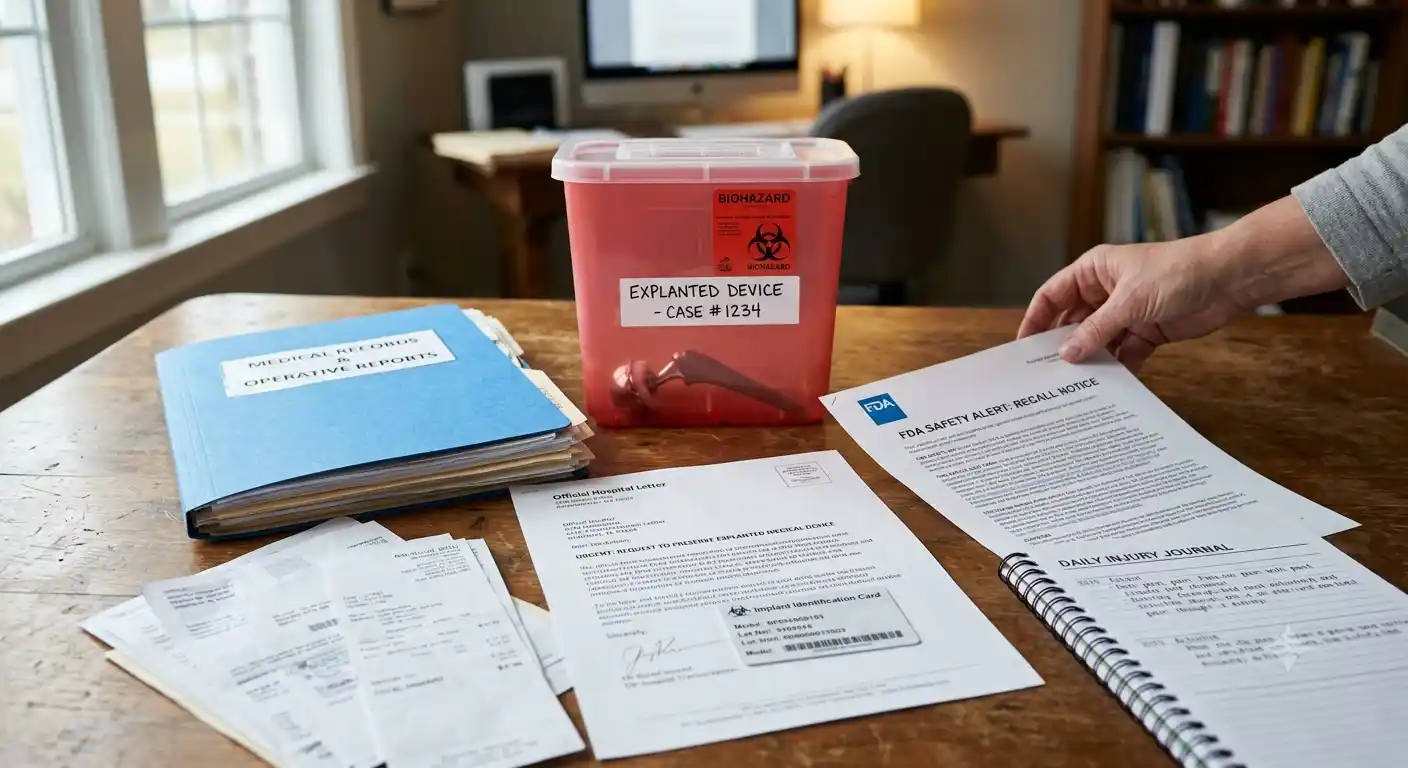
Save recall notices and correspondence. FDA safety alerts, manufacturer letters, and MedWatch reports help prove the company knew about the defect.
Document your losses. Track medical bills, missed work, travel for treatment, and how the injury affects your daily life.

How Long Do You Have to File?
Every state sets its own statute of limitations for product liability and personal injury claims, and courts strictly enforce these deadlines.
In Alabama and Georgia, you generally have two years from the date of injury to file. Florida generally allows two years for negligence-based claims filed after its 2023 tort reform law, and Mississippi generally allows three years. Some states apply a discovery rule that starts the clock when you knew or should have known the device caused your injury.
These rules carry exceptions and traps, including statutes of repose that can bar claims involving older devices entirely. Talk to an attorney before assuming you have time, because the safest deadline is today.
What Compensation Can You Recover?
A successful defective medical device lawsuit can recover economic and non-economic damages, including:
- Medical expenses, including past bills, revision surgery, and the future care your injury will require.
- Lost income and reduced earning capacity if your injury keeps you out of work or forces a career change.
- Pain and suffering, covering physical pain, emotional distress, and loss of enjoyment of life.
- Punitive damages in cases where the manufacturer knowingly concealed a defect.
Families who lost a loved one to a device failure may also pursue a wrongful death claim for funeral costs and the full value of the life lost.

Why Choose MORE 2 YOU LAW, PC
Suing a medical device manufacturer means fighting some of the largest corporations in the world. They have unlimited legal budgets. You need a firm built to match them.
MORE 2 YOU LAW, PC pursues maximum compensation in device cases across Alabama, Florida, Georgia, and Mississippi, and we charge you less when we win. You pay no fees unless we recover money for you, and your consultation is free. Our team handles the investigation, the experts, the paperwork, and the fight, so you can focus on healing.
Device cases often intersect with broader product liability claims, and our attorneys handle both under one roof.
Injured by a defective medical device? Call 888.645.2222 or contact us online for your free case review. The deadline to file is already running, so act today.
FAQs
Do I still have a case if my medical device was never recalled?
Yes. A recall helps prove a defect, but it is not required for a product liability claim. Many successful medical device lawsuits involve devices that were never formally recalled, because the legal standard is whether the device was defective and caused your injury, not whether the FDA acted.
What’s the difference between a defective medical device lawsuit and medical malpractice?
A device lawsuit targets the manufacturer for a defective product, while medical malpractice targets a doctor or hospital for substandard care. If a properly working device was implanted incorrectly, that points to malpractice. If the device itself failed, that points to product liability, and some cases involve both.
Should I have the defective device removed before filing a lawsuit?
Follow your doctor’s medical advice first, because your health comes before your case. If removal is recommended, tell your attorney beforehand and request in writing that the hospital preserve the explanted device. A discarded implant can seriously weaken an otherwise strong claim.
Can I sue if I signed a consent form before surgery?
Usually, yes. Consent forms cover the known risks of a procedure, not hidden defects the manufacturer failed to disclose. Signing a form does not waive your right to sue a company that sold a defective or dangerous medical device.
What is an MDL, and how is it different from a class action?
Multidistrict litigation (MDL) consolidates many individual lawsuits before one judge for efficiency, but each plaintiff keeps their own case and their own potential compensation. In a class action, plaintiffs share a single claim and typically split one settlement. Most major device litigation, including hernia mesh and CPAP claims, proceeds as an MDL.
How long does a defective medical device lawsuit take?
Most cases resolve in one to three years, depending on the device, the strength of the evidence, and whether the manufacturer settles or forces a trial. Cases that join an existing MDL sometimes resolve faster once global settlements are negotiated. Your attorney can give a realistic timeline after reviewing your facts.
How much does it cost to hire a defective medical device lawyer?
Nothing upfront. MORE 2 YOU LAW, PC works on a contingency fee, which means the consultation is free, you pay no out-of-pocket costs, and the firm only gets paid if you win. If there is no recovery, you owe no attorney fee.
What should I do first if I think my medical device is failing?
See your doctor immediately and describe your symptoms, because early diagnosis protects both your health and your claim. Then keep the device and all packaging if possible, save your medical records and receipts, and contact a medical device injury attorney before speaking with the manufacturer or its insurer.
RECENT POSTS

What Must a Slip and Fall Attorney Prove to Win Big?
You didn't see the wet floor because there was no sign warning you it was there. Now you're nursing a fractured wrist, a...

How Does a Personal Injury Lawyer Value a Brain Injury Case?
An 80,000-pound truck just changed your life. You're dealing with injuries, a totaled vehicle, and a trucking company that...

What Does a Car Wreck Attorney Do That You Can’t?
Your car is totaled. Your neck hurts. And an insurance adjuster is already calling, sounding friendly, asking you to "just...