
How Do You Prove a Product Liability Claim?
A defective product put you in the hospital, and now you face medical bills, lost wages, and a manufacturer that denies everything.
The company’s lawyers will argue you misused the product, the defect never existed, or something else caused your injury. Every week you wait, evidence disappears — the product gets discarded, witnesses forget, and filing deadlines in Alabama, Florida, Georgia, and Mississippi keep running. Miss the deadline and your claim dies, no matter how strong it is.
Proving a product liability claim comes down to establishing four elements with the right evidence, under the right legal theory, before your state’s deadline expires. This guide explains exactly how that works — and the product liability lawyers at More2You Law, P.C. handle every step for you on a contingency basis, so you pay nothing unless we win.
Whether it’s gathering evidence, negotiating with insurance companies, or representing clients in court, More 2 You handles every aspect with utmost professionalism and dedication.
The 4 Elements You Must Prove in a Product Liability Claim
Every defective product lawsuit rests on four elements. You must prove each one by a preponderance of the evidence, meaning it is more likely true than not.
- The product was defective. You must show the product contained a design defect, a manufacturing defect, or a marketing defect (failure to warn). The defect made the product unreasonably dangerous for ordinary use.
- The defect existed when the product left the defendant’s control. The flaw must trace back to the manufacturer, distributor, or seller — not to damage or alterations that happened after the sale. Purchase records and expert inspection establish this link.

3. You used the product as intended or in a reasonably foreseeable way. You do not need to follow the manual perfectly. Courts recognize that manufacturers must anticipate how real consumers actually use their products.
4. The defect directly caused your injury and damages. Medical records, expert testimony, and incident documentation must connect the defect to your specific harm. Causation is where corporate defense teams fight hardest, and where strong evidence wins cases.

The Three Types of Product Defects
Design Defects
A design defect exists in every unit of the product because the blueprint itself is dangerous. Think of an SUV prone to rollovers or a space heater that ignites at normal settings. Proving a design defect usually requires an engineering expert to show a safer, economically feasible alternative design existed.
Manufacturing Defects
A manufacturing defect occurs when a product departs from its intended design during production. The design was safe, but an assembly error, contaminated batch, or substandard material made your specific unit dangerous. Comparing the failed product against properly made units is often the key proof.
Marketing Defects (Failure to Warn)
A marketing defect means the product lacked adequate warnings or instructions about non-obvious dangers. Manufacturers must warn foreseeable users about risks they knew or should have known about. Missing warning labels, incomplete manuals, and misleading advertising all support a failure-to-warn claim.
Legal Theories: Strict Liability, Negligence, and Breach of Warranty
Your attorney will build your case on one or more legal theories, and the right choice depends on your state and facts.
Strict liability holds a defendant responsible for a defective product regardless of how careful they were. You do not have to prove the manufacturer acted carelessly — only that the product was defective, the defect caused your injury, and the product reached you without substantial change.
Negligence requires proof that the manufacturer or seller failed to use reasonable care in designing, making, testing, or labeling the product. Internal memos, skipped safety tests, and ignored complaint records often prove negligence.
Breach of warranty applies when a product fails to meet an express promise or the implied warranty that goods are fit for ordinary use. Warranty claims frequently accompany strict liability and negligence counts in the same lawsuit.
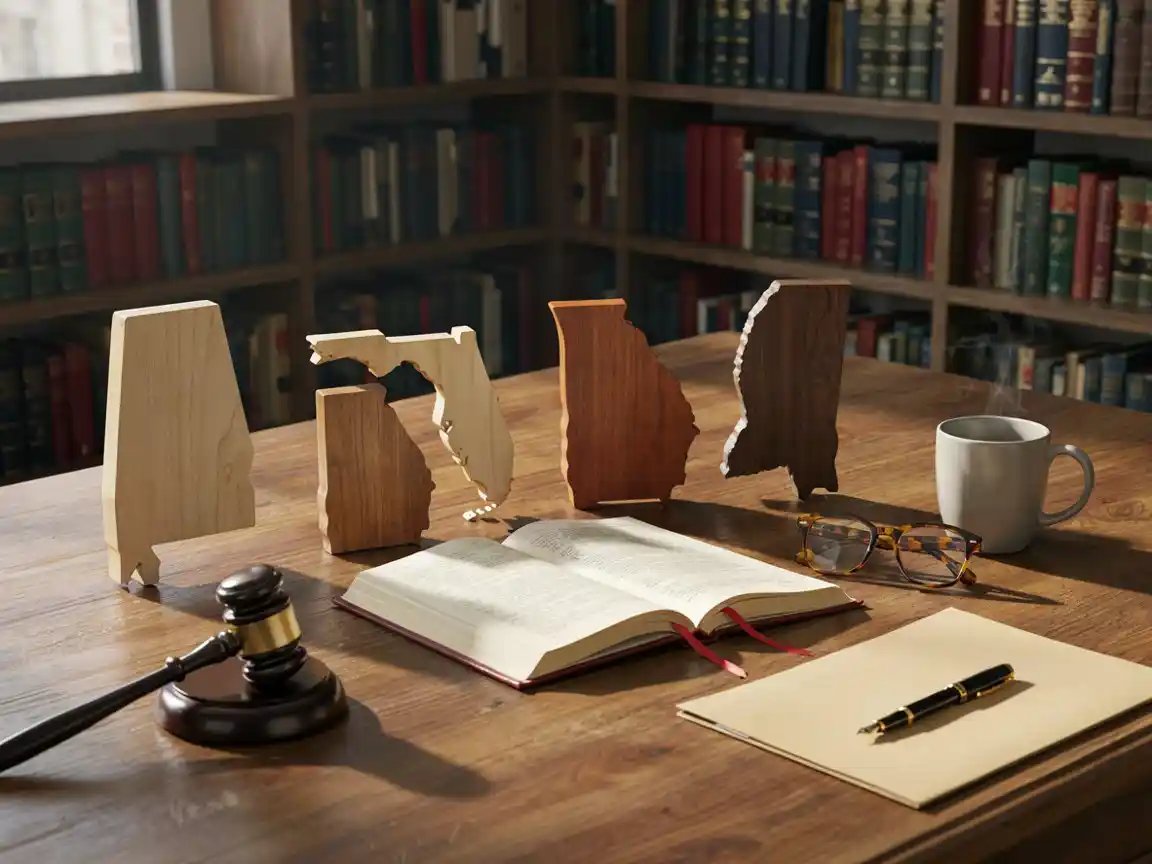
How Proof Requirements Differ in Alabama, Florida, Georgia, and Mississippi
More2You Law serves injury victims across four states, and each state proves product liability differently.
Alabama: The AEMLD
Alabama follows the Alabama Extended Manufacturer’s Liability Doctrine (AEMLD), a hybrid standard created by the Alabama Supreme Court in 1976. You must prove the product was unreasonably dangerous when it left the seller’s control and that it reached you without substantial modification. Be careful: Alabama still recognizes contributory negligence and product misuse as defenses, so how you used the product matters enormously here.
Florida: Strict Liability After West v. Caterpillar
Florida adopted strict liability in West v. Caterpillar Tractor Co. (1976). Most Florida product liability claims carry a four-year statute of limitations with a 12-year statute of repose under Fla. Stat. § 95.031, though negligence-based claims accruing after March 24, 2023 may face a two-year deadline under HB 837. Because the applicable deadline depends on how your claim is pleaded, treat two years as your working deadline and act fast.
Georgia: O.C.G.A. § 51-1-11 and the 10-Year Repose Rule
Georgia imposes strict liability on manufacturers under O.C.G.A. § 51-1-11. You generally have two years from injury to file, but Georgia’s statute of repose bars most strict liability claims filed more than ten years after the product’s first sale. Claims for failure to warn can survive beyond the repose period, which makes early legal analysis critical.
Mississippi: The Mississippi Products Liability Act
Mississippi codified its proof requirements in the Mississippi Products Liability Act, Miss. Code Ann. § 11-1-63. You must prove the product was defective, the defect made it unreasonably dangerous, the defect existed when it left the manufacturer’s control, and it proximately caused your damages. Mississippi allows three years to file under its general statute of limitations, the longest window of the four states we serve.
Who Can Be Held Liable?
Any party in the chain of distribution can share liability for a defective product. That includes the designer, manufacturer, component-part maker, wholesaler, distributor, and retailer. Naming every responsible party matters because it maximizes the insurance coverage and assets available to pay your compensation.

A successful product liability claim compensates both economic and non-economic losses. Economic damages cover medical expenses, future treatment, lost wages, and reduced earning capacity. Non-economic damages compensate pain and suffering, disfigurement, and loss of enjoyment of life.
When a manufacturer acted with reckless disregard for consumer safety, courts may add punitive damages to punish the conduct. If a defective product killed a family member, surviving relatives can pursue a wrongful death claim instead.
Why You Need a Product Liability Lawyer to Prove Your Claim
You will face some of the largest corporations in the world, and their legal teams defend these cases for a living. Proving a defect demands engineering experts, product testing, discovery battles over internal documents, and precise compliance with each state’s pleading rules. One preservation mistake — like discarding the product — can end an otherwise valid claim.
More2You Law fronts the litigation costs, retains the experts, and fights for the maximum settlement or verdict while you focus on recovery. We also handle related claims involving defective drugs and defective medical devices, which follow their own proof rules.

Injured by a Defective Product? Start Proving Your Claim Today
Evidence disappears fast and filing deadlines do not wait. Photograph everything, keep the product exactly as it is, get medical care, and then call More2You Law at 888.645.2222 or request your free consultation online. You pay nothing unless we win — and the sooner we start, the stronger your proof.
FAQs
What is the burden of proof in a product liability case?
You must prove your claim by a preponderance of the evidence, meaning each element is more likely true than not. This is a lower bar than the criminal “beyond a reasonable doubt” standard. Strong physical evidence and expert testimony typically satisfy it. Your attorney builds the record that tips the scale in your favor.
Do I still have a claim if the product was never recalled?
Yes. A recall is helpful evidence but never a requirement for a defective product lawsuit. Many dangerous products injure hundreds of people before any recall issues. Your case rises or falls on proof of the defect itself, not on government action.
What happens if I threw away the defective product?
Losing the product weakens your case but does not automatically end it. Photos, identical exemplar units, purchase records, recall data, and other victims’ reports can still establish the defect. Contact a lawyer immediately so remaining evidence gets preserved before it disappears too.
Can I recover compensation if I was partly at fault?
It depends on your state. Mississippi’s pure comparative fault rule reduces your recovery by your percentage of fault. Florida bars recovery if you are more than 50% at fault, and Georgia bars it at 50% or more. Alabama’s contributory negligence rule is the harshest — meaningful fault can bar recovery entirely — which makes skilled legal representation essential there.
How long do I have to file a product liability claim?
Alabama and Georgia generally allow two years from the date of injury, Mississippi allows three, and Florida allows up to four for strict liability claims but as little as two for negligence-based claims. Statutes of repose in Georgia and Florida can cut off claims involving older products regardless of when you were hurt. Because the correct deadline depends on your facts, call a lawyer the moment you suspect a defect caused your injury.
Do I need an expert witness to prove my claim?
In almost every case, yes. Courts expect qualified engineers or scientists to explain why the product was unreasonably dangerous and how the defect caused your injury. Defense teams always hire their own experts, so credible expert testimony on your side is not optional. More2You retains and pays these experts upfront as part of our contingency representation.
How much does it cost to hire a product liability attorney?
Nothing upfront. More2You handles defective product cases on a contingency fee, so we only get paid when we win your case. The free consultation carries no obligation, and we advance the costs of experts, testing, and litigation.
Can I sue if a defective product injured me at work?
Often, yes. Workers’ compensation may cover part of your losses, but a separate product liability claim against the equipment manufacturer can recover damages workers’ comp never pays, including pain and suffering. Defective machinery, tools, and safety equipment cause many of the most serious workplace injuries. An attorney can pursue both claims at once.
RECENT POSTS

What Must a Slip and Fall Attorney Prove to Win Big?
You didn't see the wet floor because there was no sign warning you it was there. Now you're nursing a fractured wrist, a...

How Does a Personal Injury Lawyer Value a Brain Injury Case?
An 80,000-pound truck just changed your life. You're dealing with injuries, a totaled vehicle, and a trucking company that...

What Does a Car Wreck Attorney Do That You Can’t?
Your car is totaled. Your neck hurts. And an insurance adjuster is already calling, sounding friendly, asking you to "just...